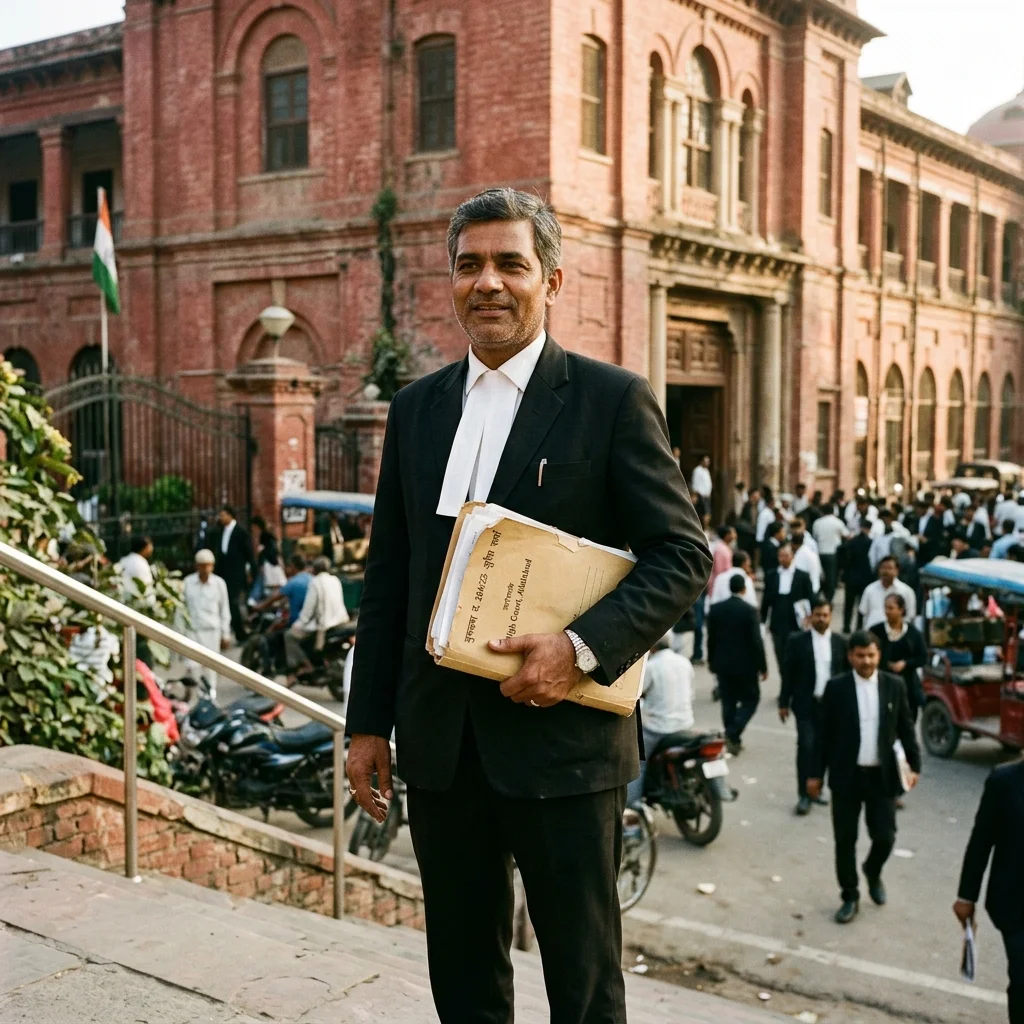
Guide to Bail, FIR & Best Criminal Lawyers in Saharanpur
Dealing with a police complaint, a First Information Report (FIR), or an arrest can be stressful. If you face a criminal matter in Saharanpur, you must act quickly and understand your rights under Indian law. Having the right support at the Court Road District Court can protect your freedom.
If you are looking for a criminal lawyer in Saharanpur to help you at the District Court on Court Road, this guide shows you exactly what to do.
1. What to Do If a Police FIR is Filed Against You
A First Information Report (FIR) is the official record written by the police when a crime is reported.
Key Legal Concept: Cognizable vs. Non-Cognizable Offenses
Action Plan:
Key Legal Concept: Quashing (Canceling a Case)
If someone files a false FIR against you over a personal dispute, you do not have to wait for a trial. A criminal lawyer can petition the High Court to quash the FIR under Section 482 of the CrPC (now Section 528 of the BNSS, 2023, which replaced the CrPC effective July 1, 2024). If the judge agrees that the case has no merit, the court will cancel the FIR and stop the police investigation immediately.
2. Understanding Your Bail Options
Bail is a court order that allows you to remain free while the police investigate or while your trial is ongoing. At the Saharanpur District Court on Court Road, there are three types of bail:
A. Anticipatory Bail (Bail Before Arrest)
If you believe the police might arrest you on a false complaint, your lawyer can apply for anticipatory bail under Section 438 of the CrPC (now Section 482 of the BNSS, 2023, which replaced the CrPC effective July 1, 2024). Read our detailed guide on Applying for Anticipatory Bail in Saharanpur and check our specialized Bail Lawyer Saharanpur Services.
B. Regular Bail (Bail After Arrest)
If the police have already arrested someone, you must apply for regular bail under Section 439 of the CrPC (now Section 483 of the BNSS, 2023).
C. Interim Bail (Temporary Relief)
This is a temporary bail granted for a short period while the court decides on your main bail application. It helps in emergencies, like a medical crisis or family urgency.
3. How a Criminal Lawyer in Saharanpur Can Help You
A defense lawyer protects you during investigations and represents you in court:
2. They present your defense clearly before the judges at the Court Road Sessions Court.
3. They examine the police charge sheet to find weaknesses in the prosecution's evidence.
4. Reaching the Court Road Sessions Court
All bail hearings and criminal trials in Saharanpur are handled at the District and Sessions Court on Court Road (Pin: 247001).
If you cannot afford to hire a private defense lawyer, visit the District Legal Services Authority (DLSA) office inside the court complex. They will assign a qualified advocate to represent you for free.
If you are facing an urgent arrest threat or police inquiry, you can consult a qualified advocate. For assistance, contact the Know Your Rights law firm desk at Chamber no. 71, Civil Court, Saharanpur, Uttar Pradesh, 247001.
5. Bail Conditions and What to Expect After Grant
When the Saharanpur Sessions Court or Magistrate grants bail, the order almost never comes without conditions. Understanding what the court will demand helps you prepare before the hearing:
If you fail to appear on a scheduled court date, the court will issue a Non-Bailable Warrant (NBW) and cancel your bail. Bail is not a right to ignore court orders — it is a conditional freedom.
6. Default Bail: An Important Right Under Section 187(3) BNSS
One of the most valuable protections in Indian criminal law is Default Bail (also called Statutory Bail). Under Section 187(3) BNSS (formerly Section 167(2) CrPC), if the police do not file a chargesheet before the court within:
you have an absolute right to apply for bail. The Magistrate must grant it. The police cannot oppose it on merits once the deadline passes, as long as you are ready to furnish bail.
This is why tracking the date of your arrest is critical. If a family member has been arrested, note the arrest date immediately and have your lawyer monitor the 60/90-day deadline. This right expires the moment the chargesheet is filed, so the application must be made before that happens.
7. What Happens When Bail Is Rejected?
If the Saharanpur Magistrate or Sessions Court rejects your regular bail application, you have multiple options:
2. Bail Before the Sessions Court: If the Magistrate rejects bail, your lawyer can immediately file a fresh application before the Saharanpur Sessions Court under Section 483 BNSS, which has wider powers.
3. Bail at the Allahabad High Court: If the Sessions Court also refuses, you can approach the High Court of Allahabad, which exercises supervisory jurisdiction over all sessions courts in UP. The High Court can grant bail even in cases where the Sessions Court has twice refused.
4. Bail Cancellation Route for Prosecution: Note that the prosecution can also approach the Sessions Court or High Court to cancel a bail already granted, if it can show misuse of liberty.
8. FIR Quashing vs. Bail: Which Should You Pursue?
These are two separate legal remedies, and the right choice depends on your situation:
If the FIR is obviously false, fabricated, or filed out of a personal or property dispute, your lawyer should pursue both simultaneously — bail in the Sessions Court for immediate freedom, and an FIR quashing petition in the High Court to end the case entirely. See our detailed guide on FIR Quashing under Section 528 BNSS.
9. How a Criminal Lawyer in Saharanpur Builds Your Bail Strategy
A strong bail application is not a simple form. An experienced criminal lawyer at the Saharanpur Court Road complex will:
2. Research Your Charge's Section: Determine whether the offence is bailable (Section 480 BNSS) or non-bailable, and which court has jurisdiction.
3. Draft a Persuasive Application: Address the three core bail factors every court considers — flight risk, witness tampering risk, and likelihood of re-offending — and counter each with specific facts about your case.
4. Manage Surety Compliance: Verify that surety documents are complete before the hearing so the court can finalize the order in a single date rather than adjourning for incomplete paperwork.
5. Follow Up on the Warrant: After bail is granted, the lawyer ensures the actual release warrant reaches the jail or police station quickly, as delays in paperwork can mean an unnecessary extra night in custody.
If you need a criminal lawyer in Saharanpur to handle a bail matter, FIR challenge, or police inquiry, contact our law desk at Chamber No. 71, Civil Court, Court Road, Saharanpur. You can also explore our full range of Criminal Defence Services.