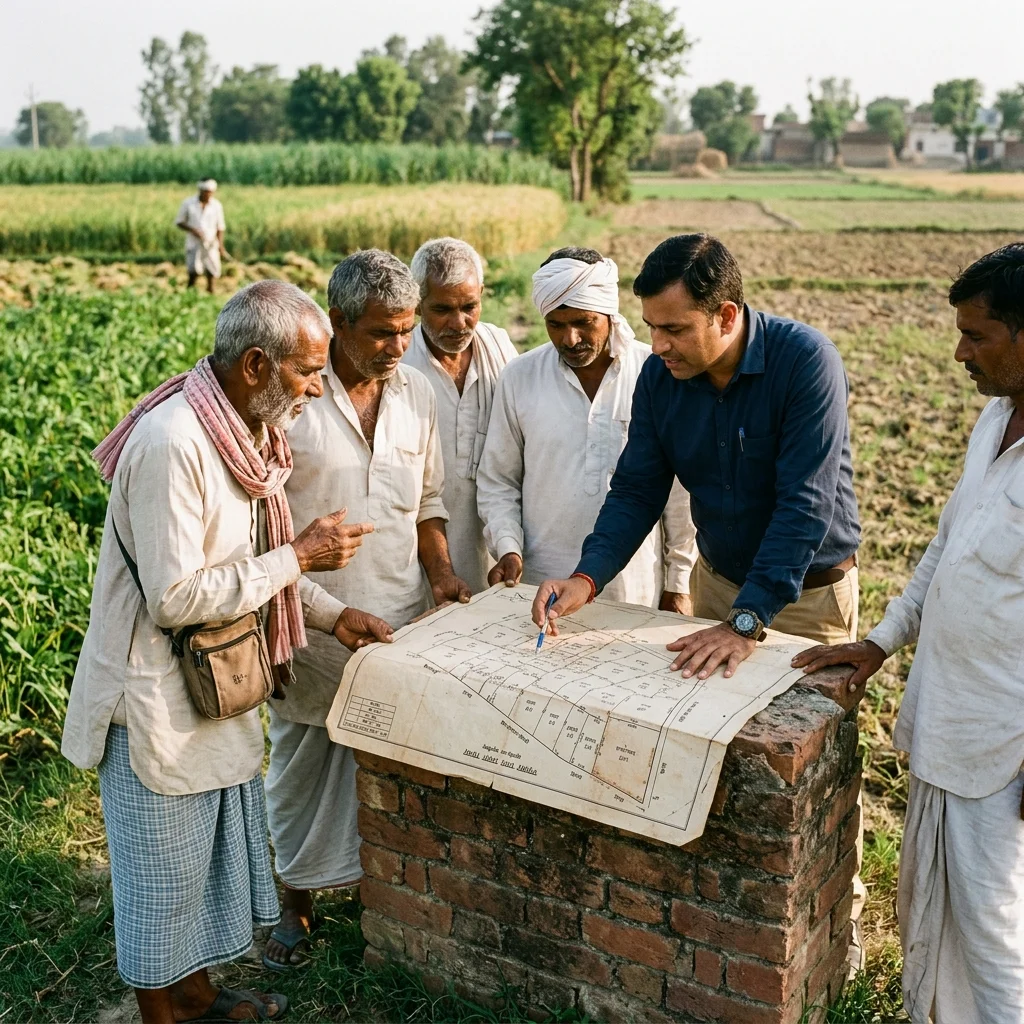
Inheritance, Wills & Succession Certificates in UP: A Complete Guide
When a family member passes away in Saharanpur or anywhere in Uttar Pradesh, the process of legally claiming their assets — property, bank deposits, fixed accounts, or government dues — can feel overwhelming. This guide walks you through the three main legal instruments: Succession Certificates, Wills, and Legal Heir Certificates, and explains when and how to use each.
1. What Happens to Property When Someone Dies Without a Will?
When a person dies without leaving a valid Will (called dying *intestate*), their property passes to their legal heirs according to the personal law that governs them:
Key Legal Concept: Coparcenary Property
Under the Hindu Succession Act, coparcenary property is ancestral property that passes down four generations. Before 2005, only sons were coparceners. The 2005 amendment made daughters equal coparceners by birth, meaning a daughter born even before 2005 now has an equal right to demand a partition of ancestral property.
2. Legal Heir Certificate: The Starting Point
A Legal Heir Certificate (also called a *Warisaan Praman Patra* in Hindi) is your first practical step after a death in the family.
Who Issues It?
In Uttar Pradesh, the Tehsildar (Revenue Officer) at your local Tehsil office issues this certificate. It lists all surviving legal heirs of the deceased.
When You Need It:
How to Apply at a Saharanpur Tehsil:
2. Attach: Death certificate of the deceased, identity proof of the applicant, and an affidavit listing all heirs.
3. The Tehsil conducts a local inquiry (Patwari report) and issues the certificate, typically within 15–30 days.
3. Succession Certificate: For Financial Assets
A Succession Certificate under Sections 370–390 of the Indian Succession Act, 1925, is issued by a civil court — specifically the District Judge's court in Saharanpur. It authorises the holder to receive debts owed to the deceased and to claim movable assets.
When You Specifically Need It:
The Court Process in Saharanpur:
Step 1 — File the Petition
A petition is filed by one or more heirs before the District Judge, Saharanpur. It must mention: the deceased's name, date of death, district of residence, the assets to be claimed, the names of all legal heirs, and why the petitioner is entitled to the certificate.
Step 2 — Court Issues Notice
The court publishes a public notice in a local newspaper and issues individual notices to all other known heirs. This is a mandatory 45-day waiting period to allow any objections.
Step 3 — Hearing
If no one objects, the court proceeds without a full trial. If an heir files an objection (for example, claiming the petitioner is not a legal heir), the matter becomes a contested suit.
Step 4 — Certificate Issued
On being satisfied, the District Judge issues the Succession Certificate. A stamp duty of 2% of the total asset value is payable on this certificate.
Key Legal Concept: Probate vs. Succession Certificate
Probate is a separate court process that *proves* the validity of a Will before a court. In Uttar Pradesh, probate is not compulsory for Hindus, Muslims, or Buddhists for property located in UP. However, for Wills involving immovable property in Mumbai or Kolkata, probate is mandatory. A Succession Certificate, by contrast, does not validate a Will — it simply authorises the heirs to collect financial assets.
4. Wills: Making and Contesting Them
A Will (or *Wasiyatnama*) is a legal declaration of how a person wishes their property to be distributed after their death. In India, any person above 18 years of age and of sound mind can make a Will.
Requirements for a Valid Will:
Should You Register Your Will?
Registration of a Will with the Sub-Registrar's office in Saharanpur is optional for Hindus, but highly recommended. A registered Will:
Challenging a Will:
A Will can be challenged in the civil court at Saharanpur on grounds of:
The burden of proving the Will's validity generally lies with the person seeking to enforce it.
5. Partition of Property: When Heirs Disagree
When multiple legal heirs inherit property jointly and cannot agree on how to divide it, any one of them can file a Partition Suit in the civil court at Saharanpur. The court then:
2. Appoints a Commissioner to inspect the property.
3. Issues a preliminary decree specifying each heir's share.
4. Issues a final decree after the physical division or sale of the property.
A simpler alternative is a Registered Partition Deed — all heirs agree on the division, draft the partition terms, and register the deed at the Sub-Registrar's office. This avoids a court suit entirely.
Key Legal Concept: Ancestral vs. Self-Acquired Property
Under the Hindu Succession Act, a Hindu has full testamentary freedom over *self-acquired* property (property he or she earned independently). However, a Hindu cannot Will away their share of *coparcenary property* without first severing their joint family ties (through a notice of partition). Daughters, as co-coparceners since 2005, also have this same right.
6. Getting Help in Saharanpur
Succession and inheritance matters are among the most technically complex areas of Indian law. A drafting error in a petition or a missed procedural step can delay asset transfers by months or years.
Our desk at Chamber No. 71, Civil Court, Saharanpur, provides:
For immediate guidance, contact our advisory team at the Civil Court compound, Saharanpur, Uttar Pradesh, 247001.