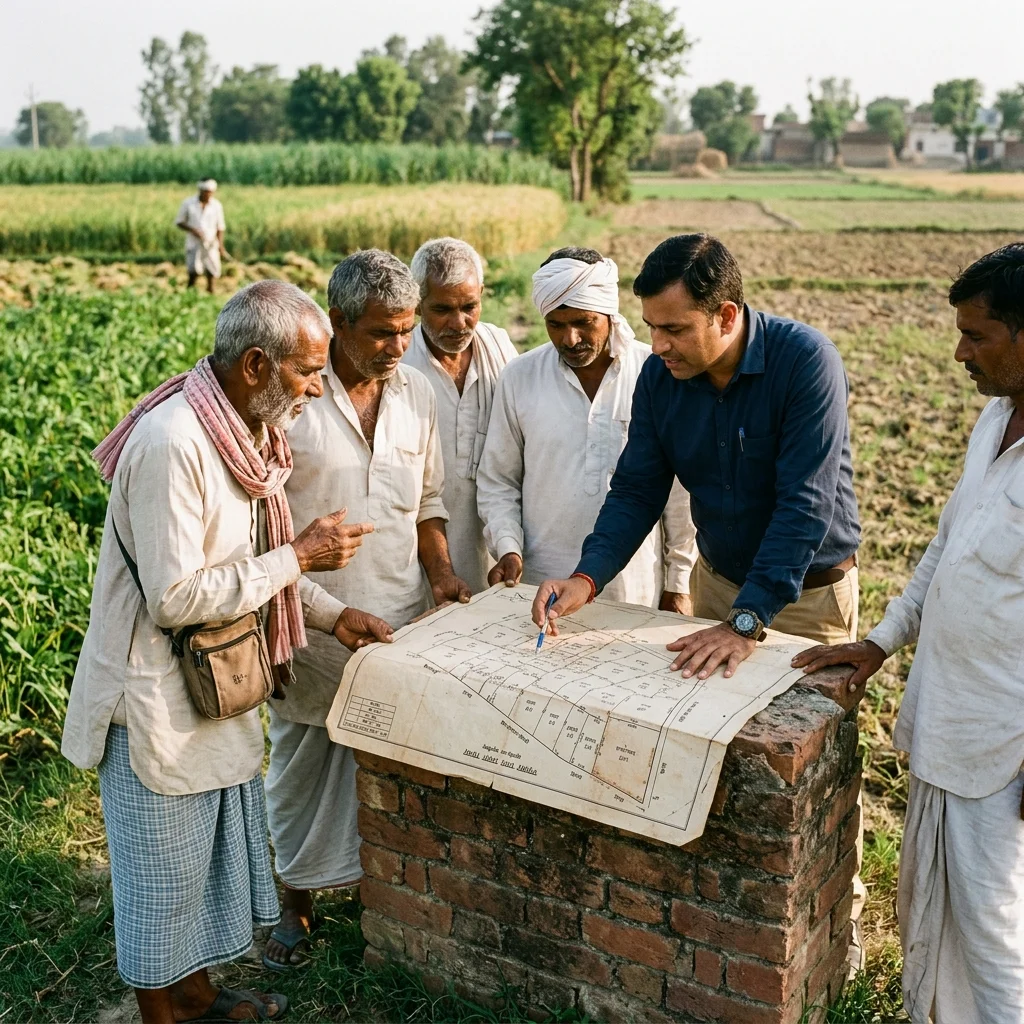
Resolving Property and Land Disputes in Saharanpur: Uttar Pradesh Land Laws
Land and property disputes are common in Saharanpur, especially in rural agricultural areas and expanding residential zones near Court Road. If someone tries to encroach on your land or files a false claim against your registry, you must act quickly. This guide outlines how to handle property disputes under the Uttar Pradesh Revenue Code.
If you are dealing with property conflicts, see our dedicated Property Lawyer Saharanpur Services to secure your registry and title.
1. Common Types of Property Disputes
Most property cases in Saharanpur fall into three categories:
2. Key Steps to Protect Your Land
If you discover a dispute over your property, you should follow these steps immediately:
2. File a Boundary Demarcation Case: If a neighbor is encroaching, you can file a demarcation case under Section 24 of the UP Revenue Code before the Sub-Divisional Magistrate (SDM) in Saharanpur. The revenue department will send an official team to measure and mark the exact boundaries of your land.
3. Obtain an Injunction Order: If someone threatens to sell or modify your land, your lawyer can file a civil suit to request a temporary injunction.
Key Legal Concept: Status Quo Order
A Status Quo order is a court directive that requires both parties to keep things exactly as they are. This means neither you nor the disputing party can build on, sell, or modify the property until the court makes a final decision. It stops any sudden changes to your land.
3. Buying Land Safely in Saharanpur
To avoid future lawsuits, you must perform a thorough check before buying any agricultural or commercial property:
Key Legal Concept: Lis Pendens
Lis Pendens is a legal notice stating that a lawsuit is pending regarding the property. Under Section 52 of the Transfer of Property Act, anyone who buys a property during a pending lawsuit is bound by the court's final decision. If the seller loses the case, you lose the property.
4. Reaching the SDM or Civil Courts
For agricultural land, your cases will be filed before the Sub-Divisional Magistrate (SDM) or Tehsildar courts in Saharanpur. For residential homes or commercial shops, the disputes go to the civil courts on Court Road.
Acting early and keeping your records updated is the best way to safeguard your property. For general guidance, read our article on How to Get Legal Help in Saharanpur, or contact our property lawyer saharanpur on Court Road.
5. How to Read Bhulekh UP and Verify Land Records Online
Before you purchase any agricultural land in Saharanpur or its surrounding tehsils, checking the Bhulekh UP portal is essential. Here is how to verify records:
2. Select your tehsil (Saharanpur, Deoband, Behat, Nakur, or Gangoh) and your village.
3. Enter the Gata/Khasra number or the owner's name to retrieve the Khatauni (record of rights).
4. Check the Bhoomi Prakar (land type): agricultural (krishi bhumi), residential, or commercial. Land type determines permissible use and which court handles disputes.
5. Verify that no Rin Bhaar (encumbrance / mortgage) is registered against the land by checking with the Sub-Registrar office separately, as Bhulekh does not always show bank charges.
A clean Bhulekh record is a good starting point — but it is not a complete title check. Court orders, partition suits, or wills affecting the land may not appear on Bhulekh. Always get a 30-year title search from a lawyer before buying.
6. Mutation (Dakhil Kharij): Getting Your Name in the Records After Purchase
Buying land in Saharanpur is not complete until your name is entered into the Khatauni through the mutation (dakhil kharij) process. Until mutation is done, the official records still show the previous owner.
Step-by-step mutation process:
2. Collect the registered sale deed with the official stamp and registration number.
3. Submit a mutation application at the Tehsildar office of the relevant tehsil with: registered sale deed copy, Aadhaar card, and existing Khatauni copy.
4. The Tehsildar publishes a 30-day public notice inviting objections.
5. If no objection is received (or objections are resolved), the Tehsildar passes a mutation order and updates the Khatauni in your name.
6. Collect the updated Khatauni from the Tehsildar or download it from Bhulekh UP.
Why mutation matters: Without mutation, you cannot apply for agricultural loans, government schemes, or sell the land again with a clean title. Disputes about unperfected mutations are common in Saharanpur's revenue courts.
7. Adverse Possession: Can Someone Else Claim Your Land?
Adverse possession (also called Bhumidhari by long possession) is a legal concept where a person who openly and continuously occupies land without the owner's permission for 12 years can potentially claim legal title in civil courts.
However, adverse possession claims in UP have important limitations:
If you have not visited or actively managed your land in Saharanpur for several years, check it regularly and keep your Khatauni updated. A physical inspection and a fresh injunction filing can interrupt an adverse possession clock before it runs out.
8. Partition Suits (Batwara) in Saharanpur
Joint family property disputes — where brothers, cousins, or co-owners cannot agree on how to divide land — are among the most common cases at the Saharanpur Civil Court. A partition suit (batwara) is the legal mechanism to formally divide jointly held property.
Key points about partition suits:
9. Emergency Possession Orders Under Section 144/145 BNSS
If someone has forcibly occupied your property or is threatening immediate dispossession, you do not have to wait months for a civil court injunction. The Executive Magistrate in Saharanpur can issue an emergency order under Section 144/145 BNSS within hours or days to:
Section 144/145 BNSS orders are executive actions (not court orders) and are time-limited, but they serve as a powerful bridge until the civil court can hear the full case. In situations of sudden dispossession or imminent violence over land, this is the fastest legal tool available.
For urgent property matters in Saharanpur, contact our desk at Chamber No. 71, Civil Court, Court Road, Saharanpur (Pin: 247001), or see our Property Lawyer Services for comprehensive guidance.