Local HelpPublished: June 07, 20266 min read

How to Handle a Police Stop or Inquiry: Know Your Rights in Uttar Pradesh

How to Handle a Police Stop or Inquiry: Know Your Rights in Uttar Pradesh

How to Handle a Police Stop or Inquiry: Know Your Rights in Uttar Pradesh

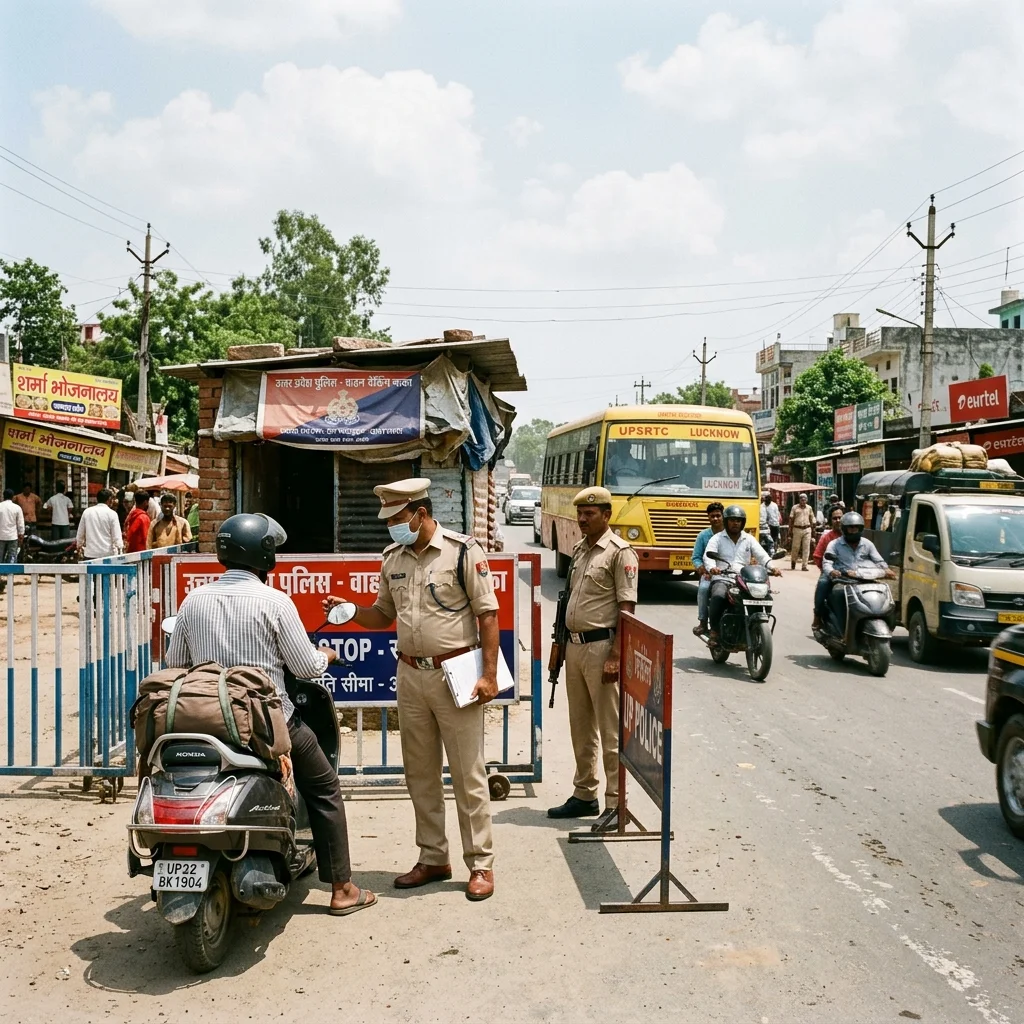
Being stopped by the police on the street or receiving a summons to visit a police station can be stressful. Under the Indian constitution, every citizen has clear legal rights that protect them during police encounters. Knowing these rules helps you remain calm and protect your freedom.

If you want to know your rights up during police questioning or checks, understanding citizen-police guidelines is an essential first step.


1. Being Stopped on the Street or Road

If a police officer stops you while you are walking or driving in Saharanpur, keep these rules in mind:

  • Ask for Identification: You have the right to ask the officer for their name, designation, and police station details.
  • Remain Polite: Avoid arguing or shouting. State your name and address if asked, but you are not required to answer complex questions without a lawyer.
  • Vehicle Search: The police can search your vehicle if they have reason to suspect it contains illegal items. You can request that a neutral local witness be present during the search.
  • Key Legal Concept: Habeas Corpus (Protecting Liberty)

    If the police detain you or someone you know without a legal reason, your family can petition the High Court for a writ of Habeas Corpus. This Latin term means "produce the body." The High Court can order the police to bring the detained person to court and explain the legal basis for holding them.


    2. Receiving a Police Summons

    The police may ask you to come to the police station for questioning. You should know your rights before going:

  • Demand a Written Notice: The police must issue a formal written notice under Section 41A of the CrPC (now Section 35(3) of the BNSS, 2023, which replaced the CrPC effective July 1, 2024) if they want you to join an inquiry.
  • 2. Right to a Lawyer: You have the right to consult a defense lawyer before answering police questions.

    3. Protection Against Self-Incrimination: Under Article 20(3) of the Constitution, you cannot be forced to give a statement that incriminates yourself.

    Key Legal Concept: In Loco Parentis (Rights of Minors)

    If the police question a child under the age of fifteen, the law requires that a parent or guardian be present. The police are acting In Loco Parentis, meaning they must protect the minor's well-being and cannot interrogate them alone at a station.


    3. Seeking Immediate Legal Support

    If the police try to detain you or pressure you during an inquiry, do not panic. Call a family member or contact a trusted criminal lawyer in Saharanpur immediately to intervene at the station. For broader guidance, see our article on How to Get Legal Help in Saharanpur.

    Knowing your rights keeps you safe and helps you handle police inquiries legally. For immediate legal help in Saharanpur, consult with the Know Your Rights law firm desk at Chamber no. 71, Civil Court, Saharanpur, Uttar Pradesh, 247001.


    4. Your Rights During a Vehicle or House Search

    Police in Saharanpur frequently conduct searches at checkpoints on national highways such as NH-58 (Haridwar Road) and NH-334 (Delhi Road). Here is what you need to know if your vehicle or home is searched:

    Vehicle Search Rights:

  • The police can stop and search a vehicle if they have a written reason to believe it contains stolen goods, illegal weapons, or narcotics.
  • For a proper search, a Gazetted Officer should either conduct the search or authorize it in writing.
  • Request a Panch Witness: You can ask the officer to have two neutral local witnesses (panchs) present during the search of your vehicle and to sign the seizure memo. Never let a search proceed without a written memo.
  • If the police find an item during the search, they must prepare a seizure memo on the spot and give you a copy. Refuse to sign any blank or incomplete memo.
  • House Search Rights:

  • For a house search, the police should ideally have a written search warrant signed by a Magistrate.
  • In cases of cognizable offences (like murder or dacoity), the police may enter and search without a warrant under emergency provisions, but they must record the reasons in writing.
  • Female Occupants: Under Section 186 BNSS, no female person should be searched except by a female officer.
  • An inventory of all items seized from your house must be prepared in your presence and signed by you and two witnesses. Request a copy immediately.

  • 5. What Happens If You Are Arrested During a Police Stop

    If a police officer at a checkpoint or during a street encounter places you under arrest, your rights kick in immediately:

  • Right to Know the Grounds: Under Section 47 BNSS (formerly Section 50 CrPC), the arresting officer must tell you immediately why you are being arrested. If they refuse or cannot state a clear reason, note this fact for your lawyer.
  • 2. Right to Inform a Family Member: You have the right to have one person of your choice informed of your arrest and the place where you are being held (Section 50A BNSS).

    3. Right to a Lawyer: You have the right to meet a lawyer of your choice within the police station premises.

    4. Medical Examination: Under Section 51 BNSS (formerly Section 54 CrPC), you have the right to be medically examined upon arrest. This creates an official record of your physical state and helps protect against false allegations of injuries sustained during custody.

    5. 24-Hour Rule: Under Article 22 of the Constitution, the police must produce you before a Magistrate within 24 hours of arrest (excluding travel time). The Magistrate is the only authority who can extend your remand beyond 24 hours.


    6. Dealing With NDPS Act Searches: Special Caution

    If the police are searching you or your vehicle for narcotics, the Narcotic Drugs and Psychotropic Substances Act (NDPS) applies special rules. These rules are critical because procedural errors in NDPS searches often form the strongest defense arguments:

  • Section 50 NDPS Requirement: When searching a person (not a vehicle or premises), the officer must inform you of your right to be searched in front of a Gazetted Officer or a Magistrate. This is a mandatory requirement. If the officer skips this notice, the entire search is legally compromised.
  • Quantity Matters Enormously: NDPS distinguishes between small, intermediate, and commercial quantities of narcotics. The difference determines whether you qualify for bail under Section 37 NDPS (which makes bail very difficult for commercial quantity cases).
  • Sampling Procedure: The police must collect and seal two samples of any seized substance in your presence, send one to a certified laboratory, and preserve the other as a court exhibit. Failure to follow this procedure is a major procedural defense.
  • See our detailed guide on NDPS Act Cases in Saharanpur for a full breakdown.


    7. Rights of Minors During Police Questioning

    Children and adolescents receive special protections under Indian law when it comes to police interaction. If a minor in your family is questioned or detained:

  • Parent or Guardian Must Be Present: No minor below the age of 18 should be interrogated at a police station without a parent, guardian, or social worker present.
  • Juvenile Justice Act 2015: Juveniles accused of offences are dealt with by the Juvenile Justice Board (JJB), not the regular criminal courts. The JJB sits in the District Court compound in Saharanpur.
  • No Handcuffs or Physical Restraints: Juveniles in conflict with the law cannot be handcuffed or placed in a regular lock-up. They must be held in an Observation Home.
  • Probation Officer Involvement: The JJB typically involves a probation officer who submits a social background report before any order is passed.
  • If your child has been taken to a police station or a case has been filed before the JJB, contact a criminal defense lawyer immediately. The juvenile justice process has strict timelines and a different orientation toward rehabilitation rather than punishment.


    8. Night Arrests and Your Rights

    Under Section 35(4) BNSS, a police officer should not arrest a woman between sunset and sunrise (after 6 PM and before 6 AM). Night arrests of women are only permitted in exceptional circumstances, with prior written permission from a Magistrate. If this rule is violated, the family should immediately contact a lawyer and file a complaint with the Superintendent of Police (SP) and the NHRC (National Human Rights Commission).

    For men, the BNSS does not restrict the timing of arrest, but the 24-hour production rule still applies: regardless of what time the arrest occurs, the police must produce the arrested person before a Magistrate within 24 hours.

    For immediate support in any police encounter situation in Saharanpur, reach our desk at Chamber No. 71, Civil Court, Court Road, Saharanpur (Pin: 247001). You can also read our Arrested in Saharanpur? First 24-Hour Guide for step-by-step actions.

    Frequently Asked Questions

    What are my rights if stopped by UP police on the road?+

    You have the right to ask for the officer's ID and badge number, remain silent or refuse to make statements until a lawyer is present, and request neutral witnesses during a vehicle search.

    Does the police need a warrant to search my house?+

    For cognizable offenses, police may conduct searches under specific conditions, but they must show their authorization or record the grounds in writing.

    Related Legal Guides

    Local Help7 min read

    Saharanpur Mein Sahi Vakil Kaise Dhundhe? — Ek Hinglish Guide

    Saharanpur mein ek acha criminal ya property vakil kaise milega? Yeh Hinglish guide aapko court compound, fees, aur pehli meeting ke baare mein poori jankari deta hai.

    Local Help6 min read

    How to Get Legal Help in Saharanpur: Local Courts & Free Assistance Cells

    Looking for a lawyer in Saharanpur or free legal assistance? This guide outlines the District Court compound layout, DLSA cells, and steps to get quick support.

    Facing a similar legal issue in Saharanpur?

    Don't navigate the legal system alone. Consult with a legal help desk advisor to evaluate your options and take the right steps today.

    Book a Call Now (Rs. 99)Browse More Guides
    Call Help Desk
    Chat on WhatsApp